
 English
 العربية
 Deutsch
 Bahasa Indonesia
 basa Jawa
 پارسی
 Português
 Русский
 Español

Yes, if the hardware stays clear of the bore. EMT describes a disk-type holder with a flat disk coupon as not interfering with pigging, and a retrievable ER probe can be pulled before a pig run without shutting down the line. Geometry and retrieval method decide the answer, not the monitoring principle.
- Holder type is the first check. EMT lists strip holders for strip coupons and disk holders for flat disk coupons; only the disk holder carries the no-interference statement, with the coupon width aligned to the medium flow.
- Base fittings are standard sizes: 2 in. welded or 2 in. flanged RF/RJ to ANSI or API, on an assembly rated 0-68.9 MPa and -70 to 120 C.
- Retrieval is a planning task. The EMT-EP100 is rated below 45 MPa and installs or removes under pressure with a retrieval tool and service valve, with no process shutdown.
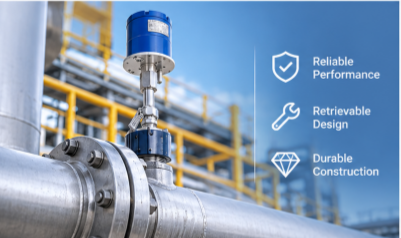
What actually blocks a pig?
Anything that projects into the bore and cannot be withdrawn before the pig arrives.
A pig seals against the pipe wall with cups or discs. A fitting that stands proud of that wall is a snag point, and a fitting that can be pulled out before the run is a scheduling item instead. That distinction is why piggability is a mechanical question before it is a corrosion-monitoring question.
EMT’s coupon holders come in strip and disk forms, with fixed or adjustable insertion length. LPR probes are built as metal-rod or cable types with insertion lengths that can be specified, so the projection is a design variable rather than a fixed property. In both cases the number that matters on a piggable line is how far the hardware reaches into the bore.
Do not generalise from one product to a whole category. EMT’s no-interference statement belongs to the disk-type coupon holder carrying a flat disk coupon. It is not a blanket statement about probes, and this article does not make one.
Disk coupon vs strip coupon: the geometry test
Judge each mounting form by what it puts in the bore and whether it can be removed.
Read the last row as a request for drawings, not as a yes or no. EMT lists four LPR probe families – gland-packed seal, flange-fixed integral weld, high-pressure carrier, and ambient threaded spool – plus retractable, fixed and cable-soft probe forms. Each one has a different insertion depth. Ask for the dimension before you sign off a pigging plan.
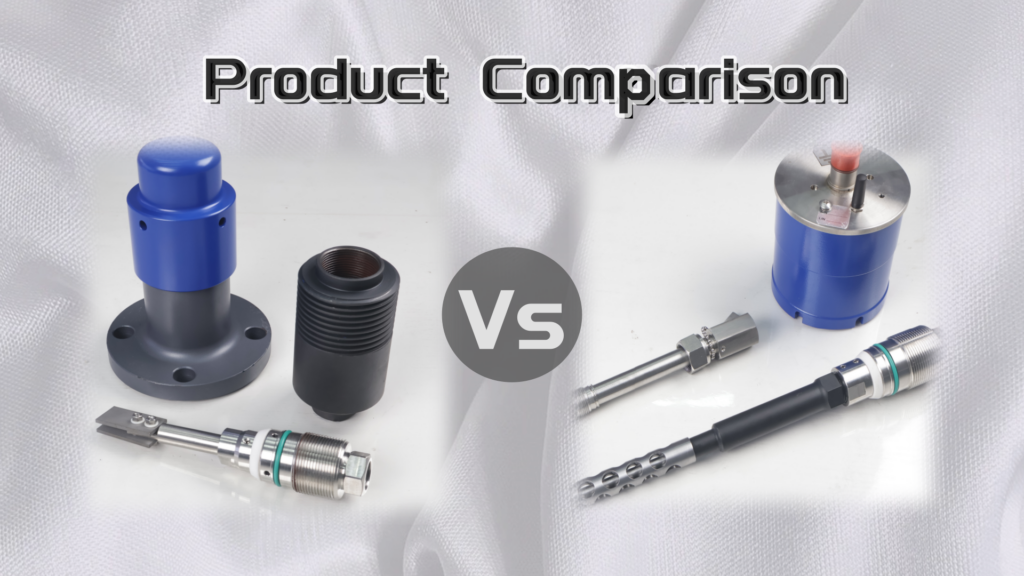
Table 1. Mounting forms checked against a piggable line
| Mounting form | What sits in the bore | Pigging statement | Retrieval |
| Disk holder + flat disk coupon | Flat disk coupon on a disk-type holder | Described as not interfering with pigging; coupon width aligned to flow | Under pressure via hydraulic assembly procedure |
| Strip holder + strip coupon | Strip coupon with fixed or adjustable insertion length | Check projection against pig clearance; no blanket statement in the manual | Under pressure via hydraulic assembly procedure |
| EMT-EP100 ER probe | Fixed-length, fully welded retrievable element | Pull before the pig run, then reinstall | Retrieval tool + service valve, no shutdown, rated below 45 MPa |
| LPR5000 / LPR6000 / LPR7000 / LPR8000 | Insertion depth set by probe form (SS / GD / RD) and mounting type | Confirm per mounting form and insertion length | Some forms are retrievable under pressure; others are fixed |
Base fittings and the direction the coupon faces
On a piggable line, orientation is part of the specification, not a field preference.
EMT’s manual requires the coupon width direction to match the medium flow direction in order to reduce drag. Get that line into the installation drawing. A coupon turned across the flow sees more force and adds a failure mode that has nothing to do with corrosion.
Table 2. Documented coupon, holder and base-fitting values
| Item | Documented value |
| Strip coupon sizes | 3 x 1/2 x 1/16 in.; 3 x 1/2 x 1/8 in.; 3 x 1 x 1/16 in.; 3 x 1 x 1/8 in.; dia. 31.8 x 3.2 mm |
| Holder types | Strip holder (strip coupon); disk holder (flat disk coupon, no interference with pigging); fixed or adjustable insertion length |
| Base fittings | 2 in. welded; 2 in. flanged RF or RJ, to ANSI or API standards |
| Installation orientation | Coupon width direction aligned with the medium flow to reduce drag |
| Protective cover | Without gauge valve; with gauge valve (vent valve and pressure gauge optional) |
| Assembly rating | Operating pressure 0-68.9 MPa; operating temperature -70 to 120 C |
Retrieving a probe before a pig run
A retrievable ER probe can be installed or removed under pressure with a retrieval tool and a service valve, without a process shutdown.
- Confirm the base type and rating on the drawing: 2 in. welded or 2 in. flanged RF/RJ to ANSI or API.
- Set the work window against the pigging schedule, not against the coupon exchange interval. A probe that comes out before every run needs a repeatable procedure.
- Fit the retrieval tool and service valve. Check the valve, the cover and the vent arrangement before work on a pressurised fitting begins.
- Carry out the exchange under the site’s pressure-work procedure and permit system. EMT’s documentation describes online installation and removal; it does not replace a site safety procedure.
- Log the element condition and order the replacement by useful life. EMT-EP100 elements in 10, 20 and 50 mil give 5, 10 and 25 mil of useful life, and the logger adapter is a separate order line.
Four specification mistakes we see
Most pigging conflicts come from wording, not from hardware.
- Writing that a probe does not interfere with pigging. EMT’s source sentence is about a disk-type coupon holder carrying a flat disk coupon.
- Leaving the coupon orientation off the drawing. The width direction must follow the medium flow.
- Specifying by pressure alone. A 0-68.9 MPa assembly rating says nothing about insertion depth or whether the form is retrievable.
- Treating the pigging calendar as an afterthought. Retrievable hardware only helps if the exchange is planned into the run schedule.
Where the monitoring method still matters
Pigging clearance is a mechanical filter; the medium is still an electrical one.
Once the hardware clears the pig, the remaining choice follows the medium. LPR applies to electrolyte environments only, so a piggable dry gas line that passes the geometry test still has no LPR option. Coupons and ER probes carry no electrolyte limit. A full decision framework is set out in the main selection guide on emt-pipe.com.
Frequently asked questions
Does a disk coupon really not interfere with pigging?
That is the wording in EMT’s coupon and probe manual: the disk-type holder is suited to a flat disk coupon and does not affect pigging operations. The manual also requires the coupon width to be aligned with the medium flow to reduce drag. The statement is specific to that holder and coupon combination, not to probes in general.
Which coupon sizes does EMT supply?
EMT lists five strip sizes: 3 x 1/2 x 1/16 in., 3 x 1/2 x 1/8 in., 3 x 1 x 1/16 in., 3 x 1 x 1/8 in., and dia. 31.8 x 3.2 mm. Flat disk coupons are used with the disk-type holder. Match the coupon alloy to the metal of the monitored section.
What base fitting should I specify for a piggable line?
EMT lists a 2 in. welded base and a 2 in. flanged base in RF or RJ facing, executed to ANSI or API standards. The complete hydraulic coupon and probe assembly is rated 0-68.9 MPa and -70 to 120 C. Base selection alone does not settle pigging clearance – add the holder type, insertion length and coupon orientation to the drawing.
Can I leave an ER probe in place during a pig run?
The EMT-EP100 is retrievable, so the usual practice is to pull it before the run and reinstall it afterwards. A retrieval tool and service valve allow installation and removal under pressure without a process shutdown. Plan the exchange into the pigging schedule.
Do I need a shutdown to remove a coupon or a probe?
EMT describes online installation and retrieval under pressure for the hydraulic coupon and probe assembly and for the retrievable EP100, using a retrieval tool and service valve with no process shutdown. Follow the site’s procedure for pressurised work.
Is EMT ASME certified?
Yes. Shenyang EMT Piping Technology Co., Ltd. holds ASME certification. Ask our team for the certificate details that apply to your project.
About EMT and certification
Shenyang EMT Piping Technology Co., Ltd. holds ASME certification. Contact our team for the certificate details relevant to your project.
Shenyang EMT Piping Technology Co., Ltd. designs and manufactures pipeline pigging, corrosion monitoring and pressure-access equipment for oil and gas service. Product figures in this article come from EMT’s own manuals and specification sheets; they are not third-party test results.
Sources and standards
Every specification in this article comes from EMT’s own product documentation: the Hydraulic Corrosion Coupon and Probe Manual (2025-01), the EMT-EP100 Electrical Resistance Probe specification and selection table, and the LPR corrosion monitoring manual with HS5000 logger and LPR5000-8000 probe specifications. These are manufacturer specifications, not third-party test results.
Standards referenced:
- ASTM G1, Standard Practice for Preparing, Cleaning, and Evaluating Corrosion Test Specimens (astm.org)
- NACE SP0775, Preparation, Installation, Analysis, and Interpretation of Corrosion Coupons in Oilfield Operations (ampp.org)
- AMPP standards library, corrosion monitoring and coupon practice (ampp.org)
- ASME B31.4, Pipeline Transportation Systems for Liquids and Slurries (asme.org)
- ASME B31.8, Gas Transmission and Distribution Piping Systems (asme.org)
- ASME B16.5, Pipe Flanges and Flanged Fittings (asme.org)
- ASME B16.34, Valves – Flanged, Threaded, and Welding End (asme.org)
- ISO 8044, Corrosion of metals and alloys – Vocabulary (iso.org)
- ISO 15156 / NACE MR0175, Materials for use in H2S-containing environments (iso.org, ampp.org)
- PHMSA 49 CFR Parts 192 and 195, pipeline corrosion control requirements (phmsa.dot.gov)